
When a Red LED Means Everything
Why repairing a broken handheld meant more than just making it work again.
William
1/8/20263 min read
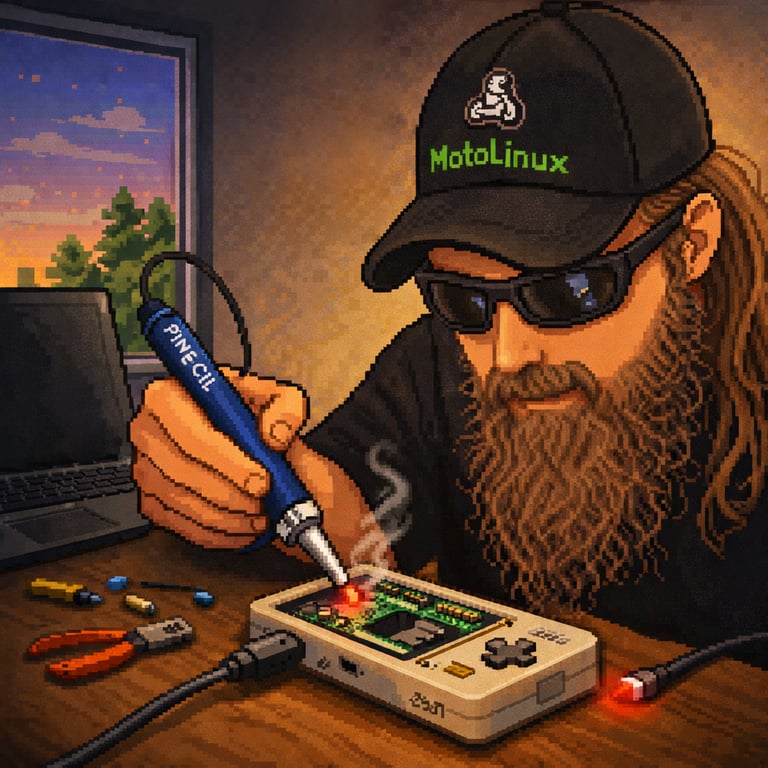
This past Christmas, I finally got to give my brother RYCADE, a tabletop arcade cabinet I built specifically for him. Seeing it in his hands felt great. Not just because it worked, but because it represented time, effort, care, and our childhood gaming roots. It followed a pattern I didn’t realize I was building.
The year before that, I had given him a Miyoo Mini Plus. I even went the extra mile and set up a MicroSD card with Onion OS, carefully loading it with games I knew he’d appreciate. It wasn’t just a handheld, it was a shared language.
Before we met up this past Christmas, he sent me a photo. The USB port was destroyed. Broken clean off rattling inside the case. No charging, no power. Dead. He told me he had no idea how it happened but I told him to bring it anyway. I’d see what I could do.
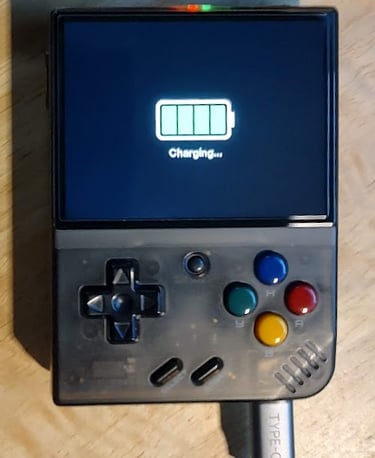
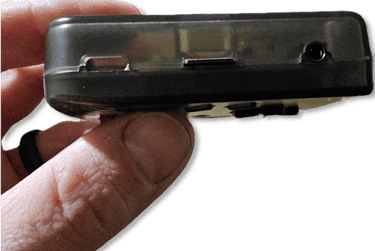
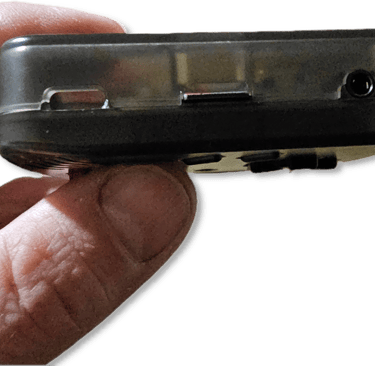
After Christmas, I was still riding the high of finishing the arcade cabinet. That sense of making something work has been harder to come by lately, especially with everything happening around my career. So instead of letting that feeling fade, I decided to see if I could extend it by fixing the Miyoo.
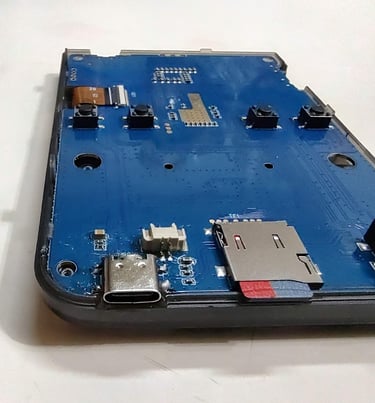
When I opened the shell, the USB port was exactly where he said it would be. Loose inside the case, pads stressed, everything looking pretty rough. Still, I figured it was worth trying. Worst case, it would stay broken. Best case... well, sometimes you get lucky.
I carefully dropped the port back into position, applied flux, and reached for my Pinecil. One by one, I soldered the legs. Then the pins. Slowly. Deliberately. No rushing. When I finished, I cleaned up the excess flux and paused.
Before putting the shell back together, before even reinstalling the battery, I plugged in a USB-C cable.
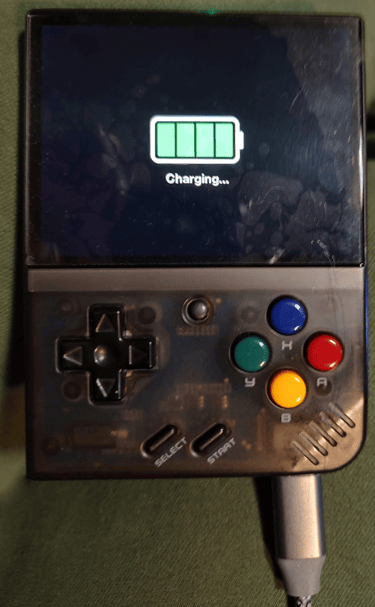
A red LED lit up. Then the screen turned on. The charging animation appeared (even though no battery was present).
I actually stopped for a second, half-expecting it to be a fluke. I unplugged it. Plugged it back in. Same result. Again. Still good.
Only then did I reassemble the case and reinstall the battery. The device charged fully. No smoke. No strange smells. No drama. Just a working handheld.
I think I actually fixed it. At this moment I almost felt the need to stand up and perform the Moonwalk!
That small win meant more to me than I expected. With so much uncertainty elsewhere, it reminded me that I still know how to solve problems. That not everything has to be replaced just because it’s inconvenient to repair. And most importantly, I wanted to fix my brother's problem in his time of need much like he's always done for me with my automotive needs (and Monica's too).
I haven’t given it back to him yet, but I’ll be seeing him soon. Before I do, I’m planning one last improvement. When I originally gave him the Miyoo, it came with a screen protector and a case. For reasons I still don’t understand, he never installed the screen protector and instead left the temporary factory plastic on the screen (bubbles and all). I don’t know how anyone plays like that 😆
So I’ll be peeling that off and installing a proper glass protector. I purchased a 3-pack of Mr. Shield glass screen protectors because I wasn't happy with my Miyoo's screen protector having a couple specks of dust between the protector and screen. I have 2 spare screen protectors I'd otherwise never use, so why not put it on his? When he gets it back, the screen will be clean, clear, and better than new.
Fixing that little handheld wasn’t just about electronics. It was about helping someone I love, someone who has always been there for me when it mattered most. My brother is an auto mechanic, and whenever my car has needed attention, he’s stepped in without hesitation. He’s done the same for Monica’s car over the years too. He doesn’t make a big deal out of it. He just helps, because that’s who he is.
I think we’re both wired the same way. We tend to be the ones helping others more than being helped ourselves. Not because we’re unwilling to accept help, but because if we can fix something on our own, we will. And if we can’t, we’ll often live without it, or learn what we need to learn so we can do better next time. So when that red LED lit up, it wasn’t just confirmation that the repair worked. It was a reminder about looking after the ones we love and appreciate the most.